How Certain Years Made Pennies Collectible
Not every year leaves a trace — these most valuable pennies to look for by year did.
American cent production history spans over two centuries of continuous operation.
Specific minting years gained numismatic priority through changes in metal composition and die designs.
Market pricing relies strictly on objective data regarding surviving specimens.
Production Period | Type Name | Primary Metal | Mass in Grams | Diameter in mm |
1793–1857 | Large Cent | Copper | 10.89 | 28.5 |
1856–1858 | Flying Eagle | Copper-Nickel | 4.67 | 19.0 |
1859–1909 | Indian Head | Bronze | 3.11 | 19.0 |
1909–1942 | Lincoln Wheat | Bronze | 3.11 | 19.0 |
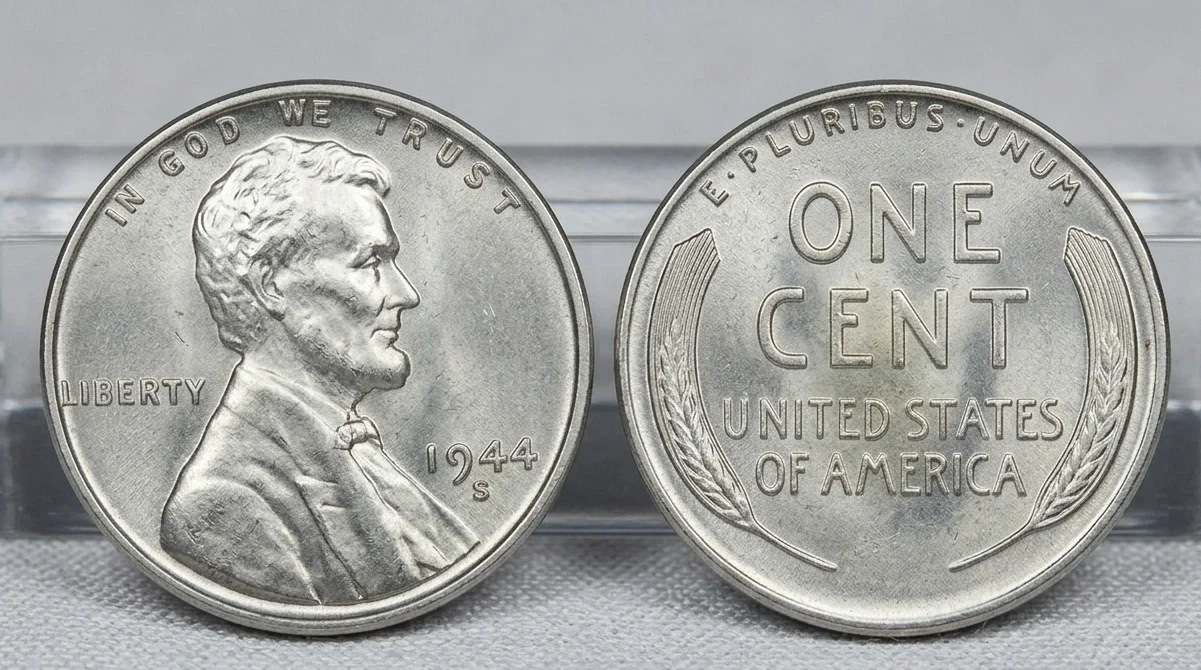
1943 | Wartime Steel | Steel | 2.70 | 19.0 |
1982–Present | Lincoln Shield | Zinc | 2.50 | 19.0 |
Reducing copper content in 1982 served as a strategic response to rising raw material costs.
Utilizing a zinc core lowered production expenses below face value.
Chronology of Scarcity and Price Records
Mintage figures determine the baseline rarity for any given issue.
1909-S VDB Lincoln Cent
Total mintage reached 484,000 units
Price in MS67 condition: $150,000
Average annual price appreciation: 4.5%
1877 Indian Head Penny
Total mintage reached 852,500 units
Price in MS66 condition: $35,000
Average annual price appreciation: 3.8%
1856 Flying Eagle Cent
Pattern mintage approximately 2,000 units
Price in MS66 condition: $170,000
Average annual price appreciation: 5.2%
Including engraver Victor David Brenner's initials on the reverse triggered public backlash.
Removing these letters mid-1909 created two distinct coin varieties.
Impact of Minting Errors on Market Liquidity
Disruptions in the technological cycle produce unique investment objects.
Misaligned dies or using blanks intended for different metals increase value exponentially.
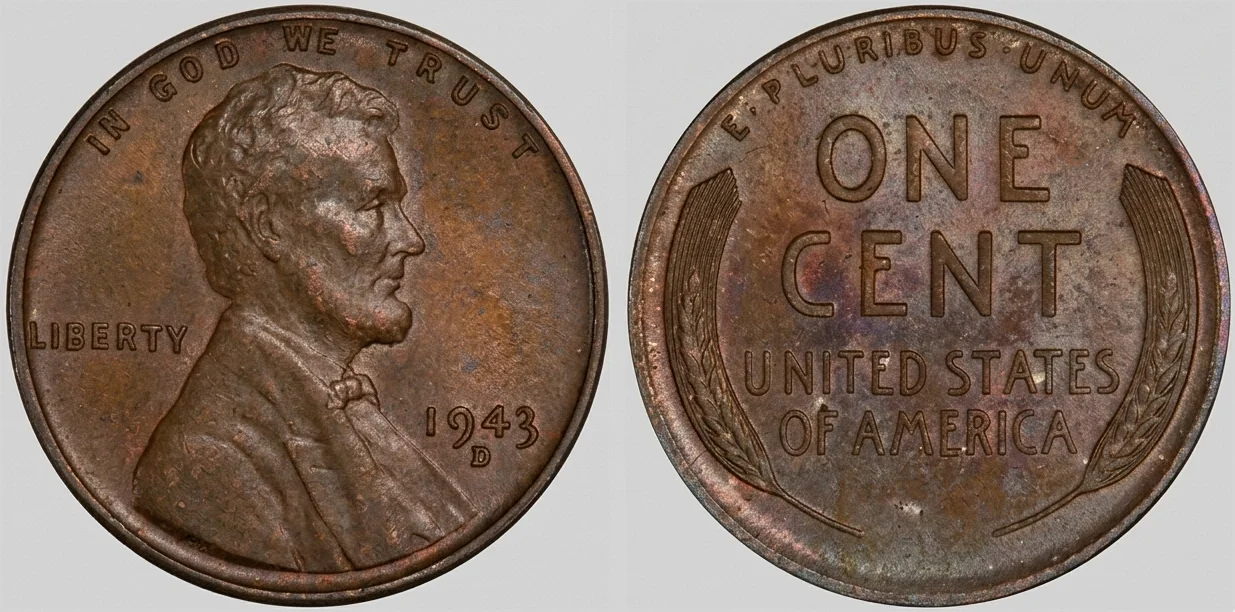
Error: Utilizing copper blanks in 1943
Result: Creation of the most expensive coin in the Lincoln series.
Price: Auctioned for $1,700,000.
Error: Doubled die strike on the 1955 obverse
Result: Clearly visible overlapping contours on numbers and letters.
Price: $50,000 for high-grade specimens.
Error: Missing San Francisco mint mark in 1990
Result: Error present in proof sets.
Price: $3,500 per unit.
Statistics indicate declining values for error coins when new large hoards are discovered.
Annual price drops for common errors average 2% during market saturation.
Condition Grading and Sheldon Scale Certification
Metal detail preservation dictates final asset classification.
Professional grading eliminates subjectivity during trade operations.
Poor 1 Category
Text barely legible.
Value: 0.1% of MS65 price.
Fine 12 Category
Basic details of Lincoln's clothing remaining visible.
Value: 5% of MS65 price.
Uncirculated 60 Category
Circulation wear entirely absent.
Value: 40% of MS65 price.
Gem Brilliant Uncirculated 65 Category
Full mint luster with no visible defects.
Value: 100% baseline.
Determine the token’s price via a coin value checker app.
Employing plastic capsules prevents copper surface oxidation.
Sealing protects metal from environmental sulfur and moisture.
Wartime Coinage Specifics
1943 economic demands required redistributing resources for defense needs.
Copper was replaced by steel for manufacturing shell casings and electrical parts.
Parameter | 1943 Steel Cent | 1943 Copper Cent |
Registry Count | Billions | Approximately 20 units |
Magnetic Properties | Attracted to magnets | No magnetic reaction |
Market Price | $0.50 | $1,700,000 |
Durability | Low due to corrosion | High |
Identifying a 1943 copper cent necessitates spectral analysis.
Counterfeits are created by applying copper plating to steel bases.
Checking weight reveals non-compliance with mint standards.
Price Dynamics by Mint Location
Production sites are identified by letter codes below the date.
Lacking a mark indicates the main Philadelphia mint.
S Index: San Francisco.
D Index: Denver.
W Index: West Point.
San Francisco coins traditionally feature lower mintage numbers.
Limited supply stimulates higher bids at Heritage auctions.
2026 observations show price stabilization for Denver issues due to high availability.
Surface Structure and Color Designations
Copper reacts with the environment immediately following the strike.
Numismatists identify three primary color states.
Red (RD)
Retaining over 95% original red luster. Price premium: up to 300%.
Red-Brown (RB)
Retaining between 5% and 95% red color. Standard market price.
Brown (BN)
Less than 5% red color with brown patina dominating. Minimal investment value.
Transitioning from RD to RB occurs within 2 years under improper storage.
Color loss reduces investment appeal by 40% annually.
Rare Varieties of the 1990s and 2000s
Modern minting technologies do not exclude microscopic variations.
Varying distances between reverse letters create rare versions.
1992 Close AM
Letters A and M in AMERICA touching.
Price: $12,000.
1998-S Wide AM Proof
Letters A and M showing wide gap on mirror field.
Price: $2,500.
1999 Wide AM
Wide gap found on circulation coins.
Price: $500.
Production figures for these varieties remain officially unpublished.
Identification happens by examining thousands of common coins from bank bags.
Investment Risk Assessment
Investing in copper assets requires understanding market cycles.
2025 inflation led to increased prices for precious metals.
Rising copper prices → Higher coin scrap value.
Rising copper prices → Risk of illegal melting.
Law prohibits destroying coins for metal profit.
Rare cent market value exceeds metal price by millions.
Basis for Collecting Large Cents
Early US Mint issues featured significantly larger dimensions.
Metal was sourced from local mines and purchased from Great Britain.
Mintage Year | Variety | Reason for Rarity | Price |
1793 | Chain Ameri | First design with criticized chain | $1,500,000 |
1793 | Strawberry Leaf | Rare leaf type | $800,000 |
1799 | Overdate | Low die survival rate | $200,000 |
1804 | Restrike | Few original specimens | $150,000 |
1793 striking quality is recognized as extremely low.
Rapid wear of soft copper caused lost inscription legibility.
Authentication Procedures and Laboratory Testing
Verifying authenticity involves checking physical and chemical properties.
Using fluorescence analysis allows determining exact alloy composition.
Microscopic edge examination with the scan coins for value app reveals signs of casting or mechanical alteration.
Comparing die patterns with PCGS database standards excludes errors.
Lacking characteristic metal flow lines suggests pressure-transfer counterfeiting.